Before the Lanikai Craft Fair existed, Lanikai Park raised its money with a luau. Volunteers gathered the food and the luau leaves, decorated a huge tent, and tended the imu. The Lanikai Association remembers the biggest job of all as "sleeping with the pigs," which meant staying overnight in the park to guard the pigs while they baked underground. In December 1988 the association tried a simpler idea: a craft fair with about 30 vendors.
Thirty-eight years later, that craft fair returns on Saturday, November 21, 2026, the Saturday before Thanksgiving. It is still run by volunteers, it still takes place in Lanikai Park, and it still pays the bills, just as the luau did. According to the Lanikai Association, the fair is "the primary fundraiser to help the Lanikai Association maintain Lanikai Park and the Lanikai beach rights of way." That one sentence explains why a holiday fair in a small park matters to anyone who walks a Lanikai path down to the sand.
The Park and Most of the Paths Are Privately Owned
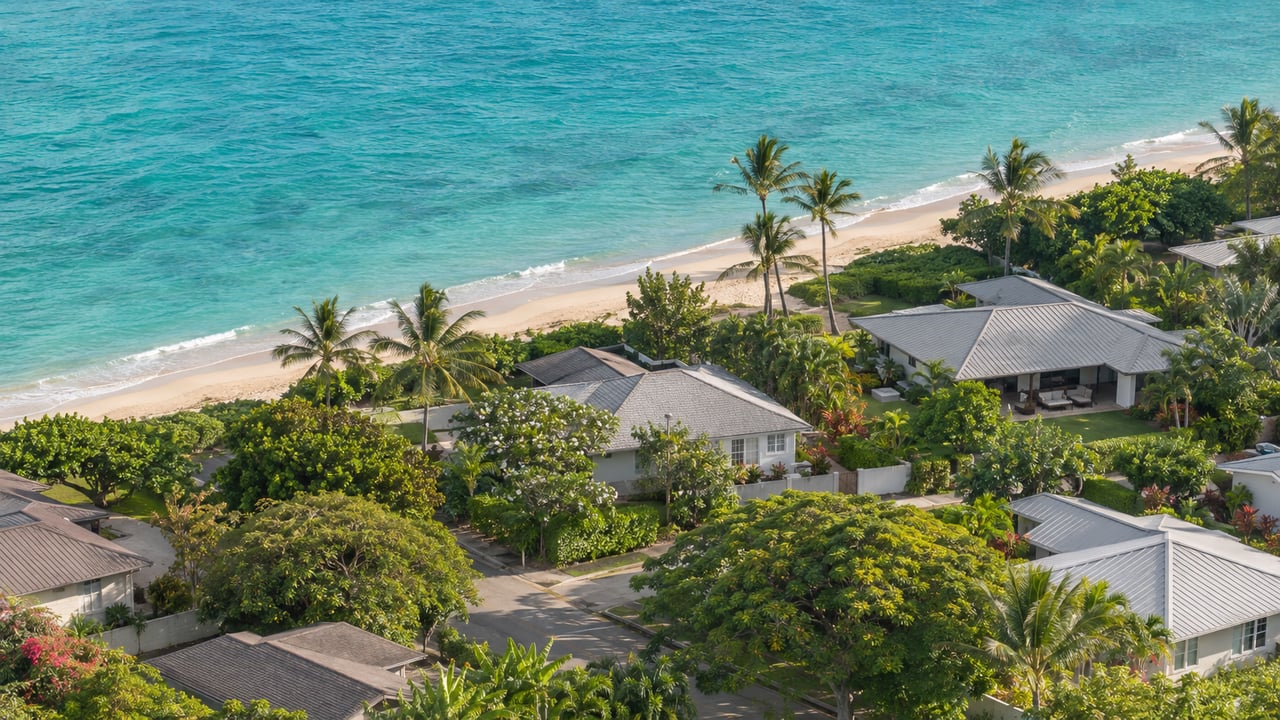
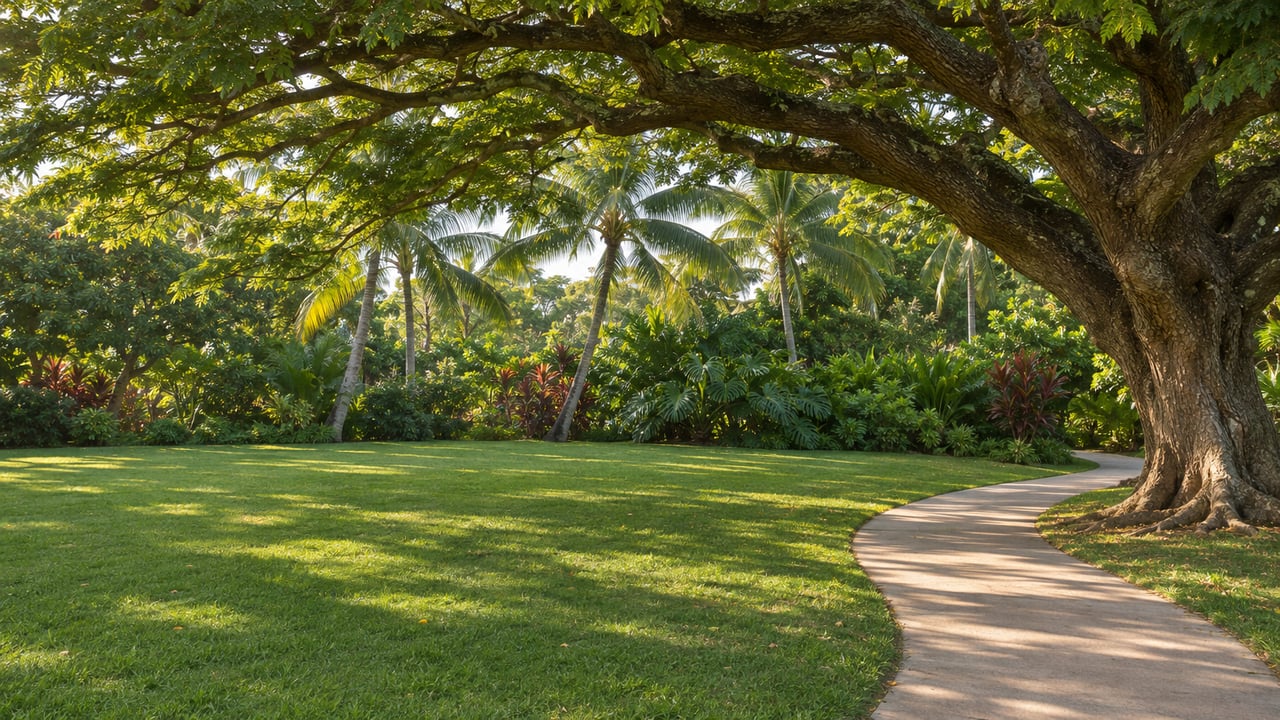
Lanikai Park and its playground are privately owned. The association's park page says the park is "privately owned but open to the public and maintained by the Lanikai Association with funds from our members." The same page says "the majority of the Lanikai Beach accesses are privately owned and maintained by our community through the Lanikai Association."
Lanikai Beach is not a beach park. There are no bathrooms, no lifeguards and no other services. The association counts 11 access points to the ocean in Lanikai. Shifting sand has narrowed the beach over the years, so only five or six of those access points still reach it. On its community page, the association says it covers the cost and work of keeping its park and eight Lanikai Beach accesses safe, welcoming and well maintained, and it keeps them open to the public.
The people doing that work are not paid. Board members, committees and volunteers serve without compensation, and member contributions go mostly to maintaining the park and the beach accesses. The arrangement is older than most homes on the street grid. Lanikai was developed in the 1920s by Charles Frazier, and the association dates to 1927.
So the shoreline access that feels public to most people is paid for privately. Membership dues cover part of it. Much of the rest comes from a single Saturday of ceramics, jewelry and baked goods.
From a Luau to About 84 Booths
The fair grew slowly, and the volunteers adjusted it along the way.
| Year | What happened |
|---|---|
| 1988 | First craft fair in December, about 30 vendors |
| 1989 | A Summer Fair added, making it twice a year |
| Later years | Back to one Christmas fair a year, so volunteers don't repeat the work in May |
| 2020 | The only year without a fair, due to Covid |
| 2021 | Fewer booth spaces, with more room between booths |
| 2023 | More than 80 volunteers worked the fair |
| 2024 | Profit of over $18,000 |
| 2026 | Saturday, November 21, at Lanikai Park |
The fair now hosts about 84 vendors, a number the association says "suits our community park space very well." As the fair grew, the bake sale was added, and the association credits it with bringing in more of the community. Hoppy Smith has been part of the fair since the beginning, and the current committee is made up of volunteers who "trained" under him.
Vendors notice the difference. The association says vendors call it one of the most organized fairs on the island. One 2023 vendor singled out the parking directors "for staying out in the hot sun all day directing traffic," and a volunteer who walked water out to the booths to sell. With more than 80 volunteers and roughly 84 vendors, that comes to nearly one volunteer for every booth.
What $18,000 Is Up Against
The 2024 fair made more than $18,000 in profit, and that money went to upkeep of the association-owned park. For a volunteer-run fair, that is a real result. The scale of the park's needs puts it in context.
The association has partnered with the Lanikai Beach and Park Foundation, a 501(c)(3), on a Lanikai Park Capital Improvement Campaign with a $200,000 goal. The campaign lists these needs:
- Major electrical upgrades, including undergrounding a utility pole
- Full replacement of all park fences, which the association says are creating safety hazards
- Security upgrades
- Bathroom improvements
- Foundation upgrades
The Parks Committee has already moved forward two projects: a new fence for the keiki playground and a new roof for the Lanikai Canoe Club longhouse. In the association's own words, those projects are "just scratching the surface." The campaign runs for a full year, until it reaches its goal.
The capital campaign covers large one-time repairs. The fair is the dependable yearly income that keeps routine upkeep going for the park and the paths to the sand.
Getting There on the 21st
The association has confirmed the date. For timing, the most recent published schedule is from 2025, when the fair ran from 9 a.m. to 3 p.m. on the Saturday before Thanksgiving at Lanikai Park, at the corner of Aʻalapapa and Kaiolena. That year, food, drinks and bake-sale items were for sale, and parking was free inside the park, as artist Mark N. Brown's fair page listed. Before heading over, check the Lanikai Craft Fair page for this year's hours and details, or email [email protected].
Parking is the main challenge on any Lanikai day. Only one public road leads in, a chain of smaller connected streets starting at the Kailua Road and Kalāheo Avenue intersection, and drivers who enter have no other public road out. The association's visitor page notes that street parking is very limited. It suggests biking, walking, or taking bus route 671, which it says runs about every 30 minutes from 6 a.m. to 6 p.m. If you live in Kailua, a bike basket can carry everything from a potted plant to a box of ornaments.
The streets around the park could change in future years. In June 2026 the City's Department of Transportation Services presented a parking update for the Lanikai Transportation Management Plan to the Kailua Neighborhood Board. Phase 1 proposes "No Parking Any Time" signs on Mokulua Drive and five loading zones between Kaʻelepulu Drive and Kuaʻilima Drive. Phase 2 proposes the same signs on Aʻalapapa Drive, the fair's own street, along with designated on-street parking areas and one-way traffic on side streets. The presentation lists $500,000 available in FY2026-27. The City's June 15 announcement describes both phases as future work, with a traffic study to follow Phase 1. For this year's fair, the street layout is the same as it has been.
Two Kailua Town Evenings Before the Fair
The Lanikai fair caps off a busy stretch on the Windward side, and it is the only event of the bunch run entirely by unpaid neighbors. The other two take place in town with corporate sponsorship.
On Thursday, November 12, Kailua Town holds its Holiday Sip + Shop from 4 to 7 p.m. More than 30 local businesses take part, Alexander & Baldwin presents the event, and check-in is outside the Lau Hala Shops lobby. On Saturday, November 14, Kala'e and Kalena Parrish play a free Kanikapila from 4 to 5:30 p.m. in the parking garage behind Longs/CVS, also sponsored by Alexander & Baldwin.
A week after the Kanikapila, the setting moves from a parking garage to a park the community owns, where booth fees and bake-sale purchases go toward fences, wiring and the beach accesses.
At Hawaii Luxury Property Advisors, we pay close attention to how Lanikai's park and beach accesses are owned and maintained, because owners and buyers there often ask about it. If you own in Kailua or Lanikai, or are considering it, and want to understand how the neighborhood works, Schedule a Free Consultation with Diana.