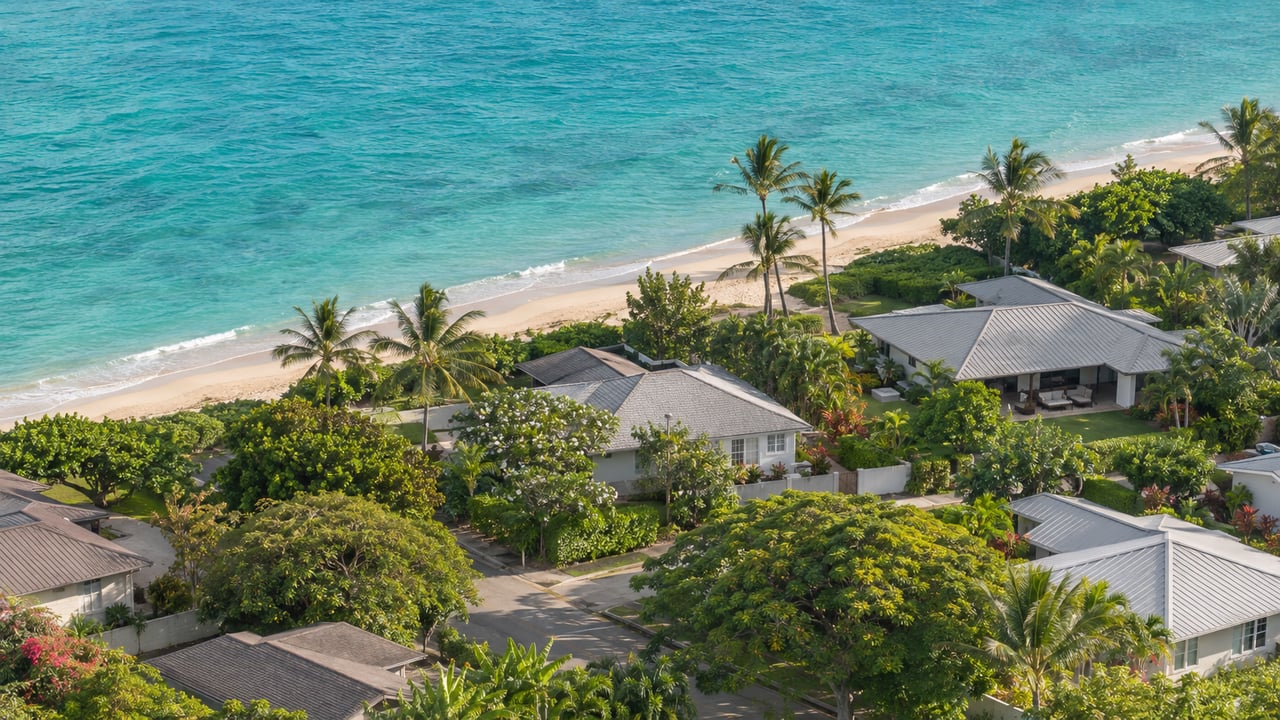
The Real Property Assessment Division values property as of October 1. A new three-tier Residential A structure begins in July 2027, and the Council hasn't set the rate for the top tier yet.
What Residential A Costs Today
Residential A applies to a home with an assessed value of $1,000,000 or more that has no home exemption. It covers single-family parcels with no more than two dwellings, residential-zoned vacant land and condominium units. For tax year July 1, 2026 to June 30, 2027, the city's published rate sheet lists $3.50 per $1,000 for Residential and two Residential A rates. The first is $4.00 on the first $1,000,000 of net taxable value, and the second is $11.40 on everything above it. All three rates are the same as the year before. The home exemption currently reduces taxable value by $120,000, or $160,000 for owners 65 and older.
The city's presentation uses a $1.6 million home to show the gap. The second row below applies the same published rates to a $3 million assessment, which is closer to Kahala price levels.
| Assessed value | With home exemption, Residential | No exemption, Residential A | Difference |
|---|---|---|---|
| $1,600,000, city example | $5,180 | $10,840 | $5,660, or 109% |
| $3,000,000, same rates applied | $10,080 | $26,800 | $16,720 |
The gap grows quickly because every dollar above $1 million is taxed at more than three times the Residential rate. Over the 12 months through September 2026, the median single-family sale in Waialae-Kahala was $2.7 million, according to one regional market summary. The Oʻahu-wide single-family median in September 2026 was $1,110,000, per the Honolulu Board of REALTORS. Sale prices and assessed values are separate numbers.
July 2027: Three Tiers, With the Top Rate Still Unset
Ordinance 25-44, passed as Bill 34 (2024), changes this structure for tax years beginning July 1, 2027. Councilmember Esther Kiaʻāina introduced it, the Council passed it on third reading October 1, 2025, and Mayor Rick Blangiardi approved it October 20, 2025.
| Residential A | Through June 30, 2027 | From July 1, 2027 |
|---|---|---|
| Tier 1 | First $1,000,000 | First $1,300,000 |
| Tier 2 | Above $1,000,000 | Above $1,300,000, up to $3,500,000 |
| Tier 3 | None | Above $3,500,000 |
The ordinance also redraws the Transient Vacation tiers at $900,000 and $2,000,000. For 2026–2027, the Transient Vacation rates are $9.00 per $1,000 on the first $800,000 and $11.50 above that. It sets the brackets but not the dollar rates, which the Council adopts each year by resolution alongside the budget. So the city will mail the 2027 assessment notices on December 15, 2026 before anyone knows the rate for value above $3.5 million.
The home exemption also rises on July 1, 2027, to $140,000, or $180,000 for owners 65 and older.
Kahala and the Top Tier
The higher threshold is relief at the low end of the class. The city's assessment presentation notes that more than 51% of current Residential A parcels are assessed below $1.3 million, so those parcels move out of the class. It also says that if the city wants the same Residential A revenue next year, "less than half of the remaining Res A population will need to offset the loss."
In October 2026, Pacific Business News reported that a Kahala Avenue oceanfront estate sold for $36 million. The property has six bedrooms, 1.3 acres and 171 feet of ocean frontage, and it was listed in April of the prior year for $45 million.
The Council's discussion of that rate has leaned toward higher-end homes. During a March 2026 budget meeting, as reported by Hawaiʻi Public Radio, Council Chair Tommy Waters asked whether the city was "looking at all ways to generate revenue, like the empty homes tax or … increase the threshold for the higher-end homes and then tax them more?" The same story noted that real property taxes provide the city $1.8 billion and that Mayor Blangiardi has refused to raise them.
The Empty Homes Tax Is Gone, Which Puts More Weight on the Tiers
The other proposal named in that question has ended for now. Civil Beat reported on July 21, 2026 that the Honolulu Charter Commission voted 8–5 on putting an empty homes tax on the November ballot, one vote short of the nine required. The Council's Bill 46 record shows the bill postponed in December 2024 and filed on August 1, 2026, so it did not become law.
The tier brackets are already law, and the Council's rate resolution next spring will set what Tier 3 costs.
This is general information about how Honolulu classifies and taxes property, not legal, tax or financial advice. Please confirm your own situation with a tax professional or the Real Property Assessment Division before you rely on it.
If you're buying in Kahala this season, or holding a home there that isn't your primary residence, Hawaii Luxury Property Advisors can coordinate with your tax advisor. Schedule a Free Consultation.