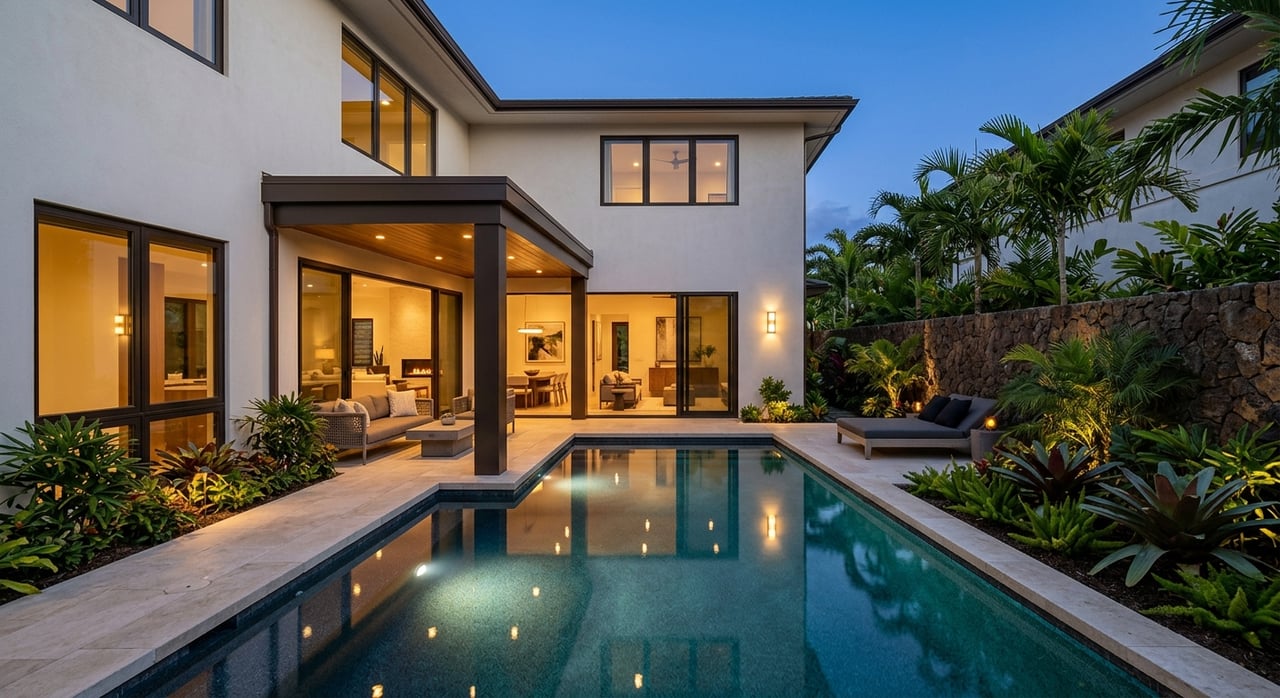
Wondering whether it still makes sense to hold onto your Lanikai vacation home? For many owners, this decision is about more than market value. It often comes down to how often you use the property, what it costs to keep, whether rental use is actually allowed, and how much ongoing stewardship you want to take on. If you are weighing your next move, this guide will help you think through the practical questions that matter most in Lanikai. Let’s dive in.
Start With Your Real Goal
Before you compare potential sale proceeds against future appreciation, it helps to get clear on what role the home plays in your life today. Is it still a personal retreat that you use and enjoy regularly, or has it become a property you visit less often while still paying for year-round?
Many owners find the answer sits somewhere in the middle. A home can feel emotionally important while also becoming harder to justify financially or logistically. That is why the most useful starting point is not price alone, but whether the property still fits your lifestyle, your travel patterns, and your long-term plans.
A simple way to frame the decision is to ask yourself if the home is primarily:
- A personal getaway
- A long-term investment asset
- A rental property
- A home you may be ready to simplify out of
If your answer is mixed, try mapping out three things before making a final decision:
- How many weeks per year you actually use the home
- What it truly costs to hold each year
- How much time and oversight it requires
Lanikai Ownership Comes With Coastal Considerations
Owning in Lanikai is different from owning an inland property. Because it is a coastal neighborhood, long-term ownership involves more than routine upkeep. Flood exposure, shoreline conditions, insurance planning, and required disclosures can all influence whether keeping the home still feels manageable.
According to FEMA’s flood insurance guidance, flood damage is not covered under standard homeowners insurance and typically requires a separate flood insurance policy. FEMA also notes that flood risk can be affected by proximity to water, elevation, storm surge, and coastal erosion.
That matters in Lanikai, where coastal conditions should be part of any keep-or-sell conversation. If your property is near the shoreline, future maintenance, insurance, and disclosure obligations may carry more weight than they would for a similar home farther inland.
The research also points to broader shoreline concerns across Hawaiʻi. Beach loss and erosion are recognized statewide issues, and seller disclosure resources in Hawaiʻi note that sea level rise risk must be disclosed where applicable. For owners thinking about a future sale, this makes early due diligence especially important.
Rental Rules Can Change the Equation
For many second-home owners, the biggest question is whether the property can help offset costs through rental income. In Lanikai, that question needs a careful and realistic answer.
Honolulu’s current rules are strict. According to the city’s 2025 short-term rental statement, sub-90-day short-term rentals are allowed only in limited resort-related zoning areas or in certain grandfathered nonconforming-use situations. In residential zoning districts, unpermitted short-term rentals are prohibited.
The same city statement says registration and parking requirements apply where short-term rental use is allowed, and fines for violations can reach $10,000 per day. It also notes that only about 770 grandfathered units remain on Oʻahu, which shows how limited legal short-term rental inventory is.
For many Lanikai owners, this means a vacation home may not be a legal short-term rental unless it falls within one of the narrow exceptions. If you have been assuming vacation rental income is available, this is one of the first issues to verify before deciding to keep the property.
Long-Term Rental May Be an Option
If short-term use is not available, long-term rental may still be part of the discussion. Hawaii’s Department of Taxation explains that rental income from Hawaiʻi real property is taxable business activity, and its rental tax guidance says that long-term rentals of 180 consecutive days or more are subject to Hawaiʻi income tax and general excise tax.
Short-term rentals of less than 180 consecutive days are also subject to transient accommodations tax, and Honolulu’s county rules add an additional 3% county OTAT on short-term accommodations. Just as important, the state notes that even if a property manager collects rent or handles filings, the owner remains responsible for compliance.
So if you are considering holding the home as a rental, the question is not just whether it can generate income. You also need to ask whether you want the administrative responsibilities that come with operating the property within current tax and regulatory rules.
Carrying Costs Deserve a Hard Look
Even if the home still has personal value, annual carrying costs may be the factor that pushes the decision one way or the other. In Honolulu, property-tax classification alone can make a meaningful difference for a vacation home.
For the July 1, 2025 to June 30, 2026 tax year, Honolulu’s posted property tax rates show a Residential rate of $3.50 per $1,000 of net taxable value. Residential A is $4.00 per $1,000 on the first $1 million and $11.40 per $1,000 above $1 million.
Using the city’s rates as an example, a $2 million assessed home would be about $7,000 per year at the Residential rate versus about $15,400 at Residential A. That is a difference of about $8,400 annually, before you add insurance, repairs, landscaping, utilities, and any management costs.
For a Lanikai owner, that gap can significantly affect the value of keeping a property that is only used part of the year. If you have not reviewed your tax classification and current annual hold cost recently, this is the time to do it.
Vacation Homes Usually Do Not Qualify for the Home Exemption
Another point that often surprises second-home owners is the owner-occupied home exemption. Honolulu’s current home exemption instructions state that the property must be owned and occupied as the owner’s principal home, with evidence such as occupancy for more than 270 calendar days per year.
In practice, that means a true vacation home will usually not qualify unless it is actually your principal residence. If your Lanikai property is a second home, you should not assume owner-occupied tax treatment applies.
This is another reason the keep-or-sell decision should be based on real annual numbers rather than rough estimates. Small misunderstandings about tax status can turn into large differences in long-term carrying cost.
Market Conditions Still Support Serious Sellers
If you are leaning toward selling, the broader Oʻahu market provides helpful context. The Honolulu Board of REALTORS® January 2026 market report showed a stable market for single-family homes rather than an overheated one.
In January 2026, single-family home sales on Oʻahu totaled 194, down 1.0% year over year. The median sale price was $1,122,500, up 0.2%, median days on market were 27, and active inventory was 674 listings, down 8.2% from the prior year.
For sellers, that suggests well-prepared homes can still move in a balanced environment, but pricing and presentation matter. Buyers are active, yet they are not chasing every listing blindly.
Lanikai also continues to draw attention in the upper-end segment. Hawaii News Now reported in July 2025 that an oceanfront Lanikai estate came to market at $16 million. That does not mean every property should be benchmarked against a headline listing, but it does show that premium Lanikai homes remain on buyers’ radar.
Signs It May Make Sense to Keep
Keeping your Lanikai vacation home may still be the right move if the property continues to serve a meaningful purpose in your life and finances. For some owners, the home is not just an asset. It is a place that still gets real use, supports family time, and fits long-term ownership goals.
You may have a stronger case for keeping if:
- You use the home regularly and value the flexibility of having it available
- The annual carrying cost feels manageable relative to your overall goals
- You understand the property’s tax treatment and insurance needs
- You are comfortable with ongoing maintenance and coastal stewardship
- The property still aligns with your long-term plans
In that case, the goal may not be to sell now, but to tighten your ownership strategy. That could mean reviewing operating costs, refining a management plan, or preparing the property so it remains easy to enjoy and easier to sell later if your plans change.
Signs It May Be Time to Sell
Selling may be worth stronger consideration when the home no longer fits the way you live. This often happens gradually. You may be visiting less, relying more on outside help, or feeling that the property has become another item on your to-do list rather than a place of rest.
You may be ready to sell if:
- The home is used only occasionally
- Property taxes, insurance, and upkeep are rising faster than you want
- You had hoped to use short-term rental income, but legal use is limited
- Coastal maintenance or disclosure issues feel increasingly burdensome
- You want to simplify your holdings or redirect equity elsewhere
For many owners, this decision is not about giving something up. It is about choosing simplicity, liquidity, and a better fit for the next chapter.
A Practical Way to Decide
If you are still on the fence, a simple side-by-side review can bring clarity. Compare the property not just as a home, but as an annual commitment.
Ask yourself:
- How many days did I use the home in the last 12 months?
- What was the true all-in annual cost?
- Is legal rental use available, and if so, in what form?
- Am I comfortable with the compliance and stewardship involved?
- Would selling create more flexibility than keeping?
When you look at the property through those questions, the right answer usually becomes easier to see. In Lanikai, this decision is rarely just emotional or financial. It is also regulatory, operational, and deeply personal.
If you would like help weighing the numbers, reviewing your property’s position, or planning a thoughtful next step, Diana Ricciuti offers a calm, owner-first approach grounded in local market knowledge, property stewardship, and hands-on guidance.
FAQs
Can you legally use a Lanikai vacation home as a short-term rental?
- In most residential zoning districts on Oʻahu, sub-90-day short-term rentals are prohibited unless the property is in a limited permitted area or has a qualifying grandfathered status, according to Honolulu’s 2025 short-term rental statement.
Do vacation homes in Honolulu qualify for the home exemption?
- Usually no. Honolulu’s home exemption generally requires the property to be your principal residence and occupied as your main home for more than 270 calendar days per year.
What taxes apply if you rent out a Lanikai vacation home?
- Hawaiʻi rental income is taxable business activity. Long-term rentals of 180 consecutive days or more are subject to Hawaiʻi income tax and GET, while shorter rentals are also subject to TAT, with Honolulu adding a 3% county OTAT on short-term accommodations.
Why do coastal risks matter when selling a Lanikai home?
- Coastal properties may involve added flood, erosion, insurance, and disclosure considerations. FEMA states flood insurance is separate from standard homeowners insurance, and Hawaiʻi resources note that sea level rise risk must be disclosed where applicable.
Is the Oʻahu market still favorable for selling a Lanikai home?
- The January 2026 Oʻahu market was stable, with single-family homes posting a median sale price of $1,122,500 and a median 27 days on market, suggesting well-prepared homes can still attract serious buyers.