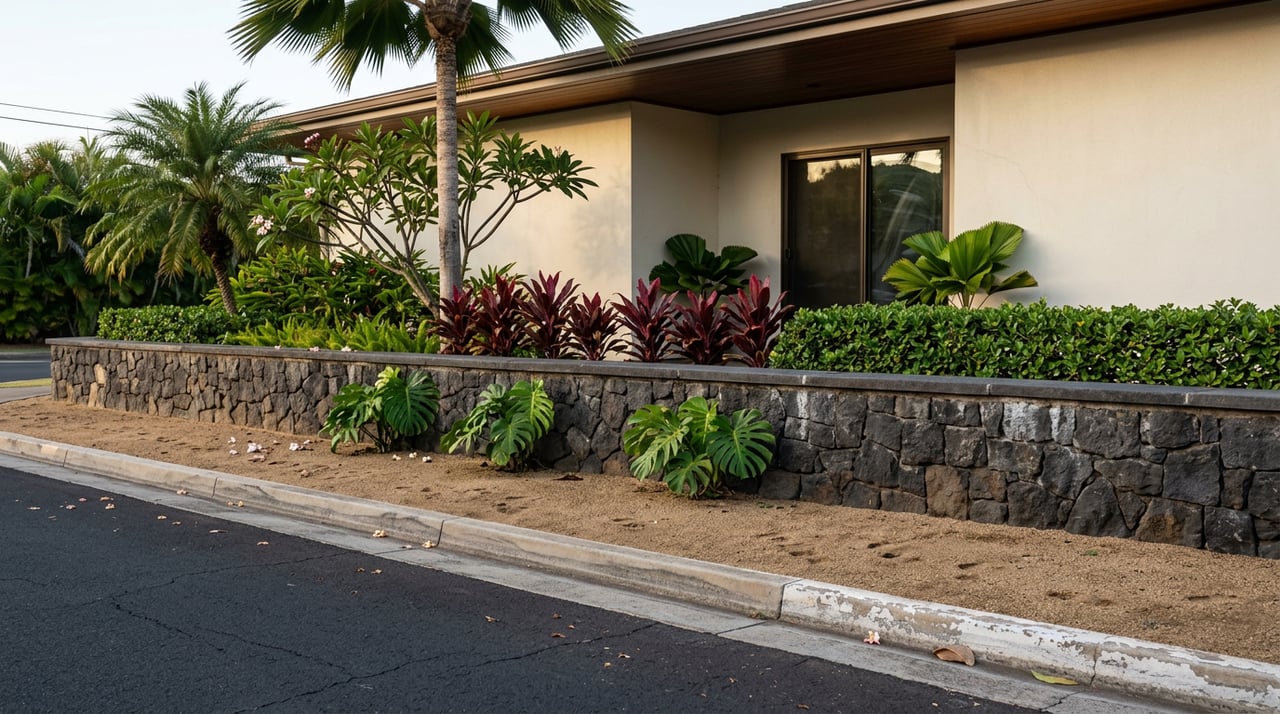
For years, the tell that summer had arrived on the loop was the sound of car doors. Three-deep against the hedge on Mokulua Drive by 6:45 a.m., a truck trying to back out of a driveway that had become someone else's turnaround, a paddler walking a canoe past a rental sedan idling for a space. That soundtrack ended on a Tuesday.
July 1, 2026 was the first morning of the permanent, all-day parking ban on Mokulua Drive, with the matching ban following on ʻAʻalapapa Drive. One month later, on the first Saturday in August, Lanikai Canoe Club won its seventh straight state championship. If you live on the loop, those two facts are the summer. Everything else is footnote.
What the Ban Actually Says, and What It Left Alone
The rulebook is narrower than the neighborhood chatter suggested. The Lanikai Transportation Management Plan, developed by the City and County of Honolulu's Department of Transportation Services, converted the loop's curbs from informal overflow parking into no-parking corridors with only a handful of three-minute loading zones as exceptions. Cross streets between the two drives are being made one-way, with parking allowed on one side and restricted from 10 a.m. to 4 p.m.
That is the whole change at the curb. It does not touch zoning, setbacks, or how many guests you can have over. It does not close beach access. It does not restrict residents' own driveways. It replaces a curb that had been doing crowd-control work with a curb that isn't.
The baseline that made the plan defensible is worth holding in your head. City officials counted about 170 cars parked illegally along the loop near Lanikai Beach every day, and residents had described drives out of the neighborhood that stretched into hours, with ambulances struggling to reach homes on the far side of the loop. Tom Cestare, then the Lanikai Association's longtime president, backed the plan and described it as the product of a decade of observing what worked and what didn't.
The interesting question a month in is not whether the ban is working. It plainly is. The question is what the loop sounds like once you take 170 daily curbside decisions out of the equation.
The Other Lanikai Headline This Summer
While the curb was going quiet, Keʻehi Lagoon was not. On August 1, 2026, Lanikai dominated the Hawaiian Canoe Racing Association State Championship regatta in a field of 57 clubs from six outrigger canoe paddling organizations, held amid summer heat, steady trades, and occasional brief showers. The AAAA division standings had Lanikai at 479 points, ahead of Hawaiian (397) and Kai ʻEhitu (311). Head coach Scott Freitas described a race that was closer than the final margin suggested, with Lanikai posting 10 wins and 10 runner-up finishes across the day.
The scale of the event matters for how the loop feels in July. Nearly 3,000 paddlers ranging in age from 7 to 87 competed in 44 races spanning from a quarter mile to a mile and a half at Keʻehi Lagoon. The state final is the top of a season that runs from April through the first Saturday in August, and Lanikai Canoe Club, based at Lanikai Park at ʻAʻalapapa Drive and Kaiolena Drive, is a 501(c)(3) volunteer organization with 400 to 500 paddlers ages nine and up. Which means a meaningful slice of your neighbors, or their kids, spent June and July inside that number.
Two weeks earlier, on July 19, Lanikai had already sealed its eighth consecutive AAA-division title at the Oahu Hawaiian Canoe Racing Association Championship regatta, matching Outrigger Canoe Club's 1985 to 1992 run as OHCRA's longest championship streak. Lanikai has now won 48 straight OHCRA competitions dating back to 2017.
Put the two summer stories next to each other and the loop has a coherent identity for the first time in a long time. The neighborhood is not being defended from beach traffic. It is being heard on its own terms, and its own terms are a canoe club that keeps winning.
The Loop, Read on a Wednesday Morning
A walk around the loop in late July feels different in ways that aren't dramatic and aren't nothing.
Sightlines are back. The three-deep parking on Mokulua had been doing what a hedge does, screening the view but also darkening the sidewalk. With the curb clear, the sun gets to the pavement earlier, and the small rises between beach-access paths read as rises again.
Backing out of a driveway is a driving maneuver, not a negotiation. That is the piece residents will feel most and articulate least, because it is the absence of a friction rather than the presence of an amenity.
The 6 a.m. paddling window at Lanikai Park is more porous. Canoe trailers can turn. Paddlers walking down from ʻAʻalapapa can cross without threading. Given the club's summer results, more of the people you pass in that window are moving with purpose than were a year ago.
The Kaʻiwa Ridge trailhead, opposite Mid-Pacific Country Club on Kaʻelepulu Drive, still gets its early hikers, but the ones who used to circle the loop looking for a space have largely stopped trying. The Pillbox trail's parking situation shares the same rules as the beach loop, so the funnel effect is the same: the beach-park anchor and the neighborhood loop are now one traffic system rather than two.
Weekends still fill in, especially at the access lanes. But the fill happens on foot, from the Kailua side, rather than at the curb.
Routing Guests Without a Text-Message Spiral
The single practical shift for anyone who hosts on the loop is that the drop-off is now the plan. A month in, the arrangements that produce the fewest follow-up texts look like this:
The bus from Kailua Town. TheBus Route 671 runs between Kailua Town and Lanikai roughly every 40 minutes, at $3.25 cash with exact change or $3.00 with a HOLO card. For guests already staying in Kailua proper, the least friction option is a stop location and a text.
Kailua Beach Park as the anchor lot. The lot sits about a half mile from the Lanikai beach access lanes. The walk climbs a small rise before descending into the loop, with the bay view as the reward on the way in. This is the default for guests arriving in a rental car.
Bikes and e-bikes. Rentals from Kailua Beach Adventures or Active Oahu turn a three-mile loop from a parking problem into a ride. For visitors staying two or more nights, this is often the version they remember.
Loading zones, used as loading zones. The three-minute limit means drop-off, not "run in for a coffee." Treat them as taxi behavior.
DTS has said it plans to request funding to add a bus to Route 671 and to install bike racks and drop-off zones near the beach. Those additions haven't fully arrived. The current arrangement works because the loop has emptied out enough to let it work, not because the supporting infrastructure caught up.
A Note for Anyone Hosting Paddlers or Pillbox Hikers
Two small hospitality pieces have shifted with the ban.
If a paddler in your household is training, the walk between a loop address and Lanikai Park is now genuinely walkable in the morning without navigating a car door line. The club's competitive season begins training in April and runs through the HCRA State Championship in early August, and the long-distance season picks up the day after states. If you moved to Lanikai partly for that culture, this is the first summer in a while where the neighborhood's daily geometry actually supports it.
If you have hikers coming through, the Kaʻiwa Ridge trailhead sits opposite Mid-Pacific Country Club, and the practical instruction is the same as for the beach: park at Kailua Beach Park, walk in. The trail itself is short and steep, climbing just over 400 feet from the trailhead to the Upper Pillbox in about 0.45 miles. Guests underestimate the sun and the loose gravel. A hat and real shoes are the two things worth pressing on before they leave the house.
For breakfast on the way back, the Kailua rotation your guests will most easily find themselves in is Kalapawai Cafe, Cinnamon's, Buzz's for later in the day, and Lilikoi Kitchen's newer Kailua Road location. New Kamana Kitchen 3, which opened in February 2026 in the Kailua Shopping Center at 600 Kailua Road in the former Himalayan Kitchen space, has added an evening option that works after a beach day when you don't feel like assembling dinner at home.
What This Summer Actually Meant
The parking ban is being read in a lot of ways this month. Some of them are wrong. It is not a signal that Lanikai is closing itself off. It is not a change in what the beach is, who can visit, or how the neighborhood is zoned. It is a fix to a specific problem that had gotten specific enough to measure at 170 cars a day.
What it changed is the delta between the Lanikai a real estate listing describes and the Lanikai a resident actually experiences on a Wednesday morning. For years those two neighborhoods had drifted apart. This summer they moved closer together, in the same weeks that the club at Lanikai Park was collecting its seventh straight state title and the loop went quiet enough that you could hear the paddlers walking down to the water.
If you own on the loop and have been weighing what this summer means for your home, your guest routine, or your longer-term plans as an owner, Hawaii Luxury Property Advisors is available for a quiet conversation. Schedule a Free Consultation when the timing is yours.